How Weather and Seasons Change Bell Tower Visits: A Month-by-Month Local Angle
A month-by-month guide to how weather, light and seasonal access shape bell tower visits, with practical...

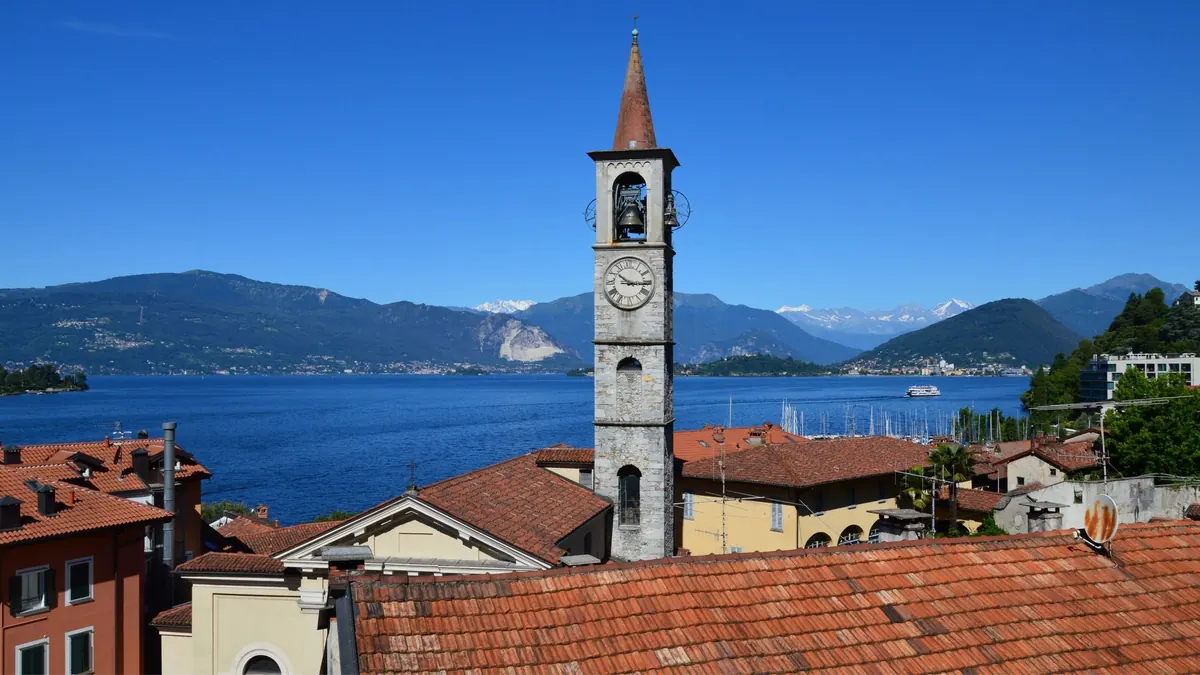
Most Italian towns give you one tall thing to look at, and it is usually a bell tower. It stands in the piazza, or beside the duomo, or on the ridge above the roofs, and it is almost always older than it looks and stranger than it needs to be. Five minutes of deliberate looking will tell you roughly when it was built, how rich the town was, and whether the builders followed one confident plan or changed their minds every fifty years. You don't need a degree in art history. You need to know where to look, and in what order.
Almost everyone photographs the top of a campanile and ignores the bottom, which is a shame, because the base answers the most useful question: what shape is this thing?
Square is the standard. It is cheap to lay out, easy to roof and stable in brick and stone, and the overwhelming majority of Italian bell towers are square in plan. Round towers exist and are worth a detour — the campanile at Ravenna's Sant'Apollinare in Classe is a fine early example, and Pisa's famous leaning tower, begun in 1173, is a cylinder wrapped in arcaded galleries. A round tower is a statement. Circular masonry needs more centring, more skill and more money, so a round campanile usually means a town with something to prove.
Octagonal towers tend to be later, or belong to a different building type entirely. Also, before you go any further, note where the tower stands. In Italy the bell tower is very often freestanding, or attached to the church by only one corner. Pisa, Florence and Modena all put their towers slightly apart from the facade. If the campanile is fully embedded in the church front, you are probably looking at a later rebuild, a parish church in a mountain valley, or a building that has been substantially rearranged.
Now let your eye climb. The long middle section is where the evidence is.
Look first for thin vertical strips running up the wall, sometimes joined near the top by a row of small arches. Those are pilaster strips and Lombard bands, and they are the signature of Romanesque masonry in northern and central Italy from roughly the eleventh and twelfth centuries. There is usually a rhythm to them — three strips, an arch, three more — and once you notice the pattern you will see it from the far end of the street.
Then look for interruptions. A sudden change of brick colour, a different block size, a course of reused Roman stone, a seam where a scaffold once stood: these are the joins between building campaigns. Towers took generations. The base might be twelfth-century, the middle fourteenth, the top nineteenth. Some lean precisely because one side settled while the masons were still arguing about the next stage. Bologna's Garisenda is the famous case, but dozens of smaller towers tilt a degree or two and nobody writes a postcard about it.
One caution: bare brick is not always original. Many Italian towers were rendered and limewashed for centuries and were stripped back to bare masonry in the nineteenth or twentieth century, so a tower that looks medieval may be showing you a modern surface.
Above the shaft comes the part that gives the tower its name — campana, bell. Look for the storey where the wall suddenly becomes mostly hole. That is the belfry, and its openness is not decorative: sound has to get out, and the load up there is lower, so the masonry can afford to be a frame rather than a wall.
The openings are the single most reliable way to date a tower at a glance. In early towers the belfry barely differs from the shaft, with one small round-arched opening per face. Over time the openings multiply and elaborate.
A useful rule: the tower should read as a crescendo, solid at the bottom, porous at the top. If the whole shaft is perforated, you are looking at a Gothic or later structure. If the belfry looks like a shrunken copy of the base, you are probably in Romanesque territory.
Finally, the silhouette, which is what you recognise from a distance.
Romanesque towers usually stop with a low pyramidal roof or a shallow terrace; the emphasis was never on the summit. Gothic towers reach — Florence's campanile, begun by Giotto in 1334, is a flat-topped composition of polychrome marble panels, statues and niches, and it is as much a sculpture as a tower. Venetian and Lombard towers often carry a tall brick pyramid, sometimes with a lantern and a gilded figure: St Mark's campanile, rebuilt after its 1902 collapse, ends in a green copper spire with the Archangel Gabriel. Siena's Torre del Mangia caps its brick shaft with a bright white stone crown. Lucca's Guinigi tower grows actual holm oaks on its roof.
Also look at what has been added: battlements, corbels, a clock face, iron flags and weathervanes, TV aerials, a lightning conductor, sometimes a small bell-loft door that opens onto nothing. All of it is information about how the tower has been used since it was built.
Thick walls, small openings, round arches, heavy proportions, Lombard bands, and a belfry that looks structurally cautious. Brick or rough stone. Squat rather than soaring.
Taller, thinner, pointed arches, more light, and an appetite for ornament — tracery, crockets, statues in niches, coloured marble revetment. The vertical line wins.
Back to round arches, but now with applied orders: pilasters, capitals, a definite cornice at each level, symmetry you can measure with your eye. Crowns become calmer and more geometric.
Curving crowns, scrolls, volutes, broken outlines, stucco, bulbous or onion-shaped tops in some regions. Baroque belfries look like they were squeezed into shape rather than drawn.
Expect mixtures. A Romanesque shaft with a Baroque crown is entirely normal, and often the most interesting thing about the tower.
Step back and take in the position. A campanile attached to a cathedral speaks for the church; a tower rising from the town hall or the main piazza speaks for the commune, and the two did not always agree. Civic towers like Siena's were built to be seen over the rooftops and to hold a bell that summoned citizens, not just worshippers.
Check the clock. Mechanical clocks arrived in Italian towns from the fourteenth century onward, and many were simply punched into an existing belfry wall, sometimes replacing an opening. A clock face lower down the shaft usually means a later addition; a clock integrated into the design means the tower was built or remodelled with civic timekeeping in mind. And listen: if the bells ring, note how many and how they are arranged. A large concert of bells requires a stronger frame, and that has shaped more than one belfry.
Do this three or four times in different towns and the vocabulary starts to stick. You will find yourself dating towers from a moving car, and arguing about belfry openings over lunch — which is, more or less, how everyone else here learned to look at them.
Photo: SlimMars 13 / Pexels
A month-by-month guide to how weather, light and seasonal access shape bell tower visits, with practical...
A practical comparison of campanile climbs by view, access and crowds, with tips on stairs, timing and...
A practical walking route for reading a historic Italian town through its bell towers, from belfry details...