How Weather and Seasons Change Bell Tower Visits: A Month-by-Month Local Angle
A month-by-month guide to how weather, light and seasonal access shape bell tower visits, with practical...

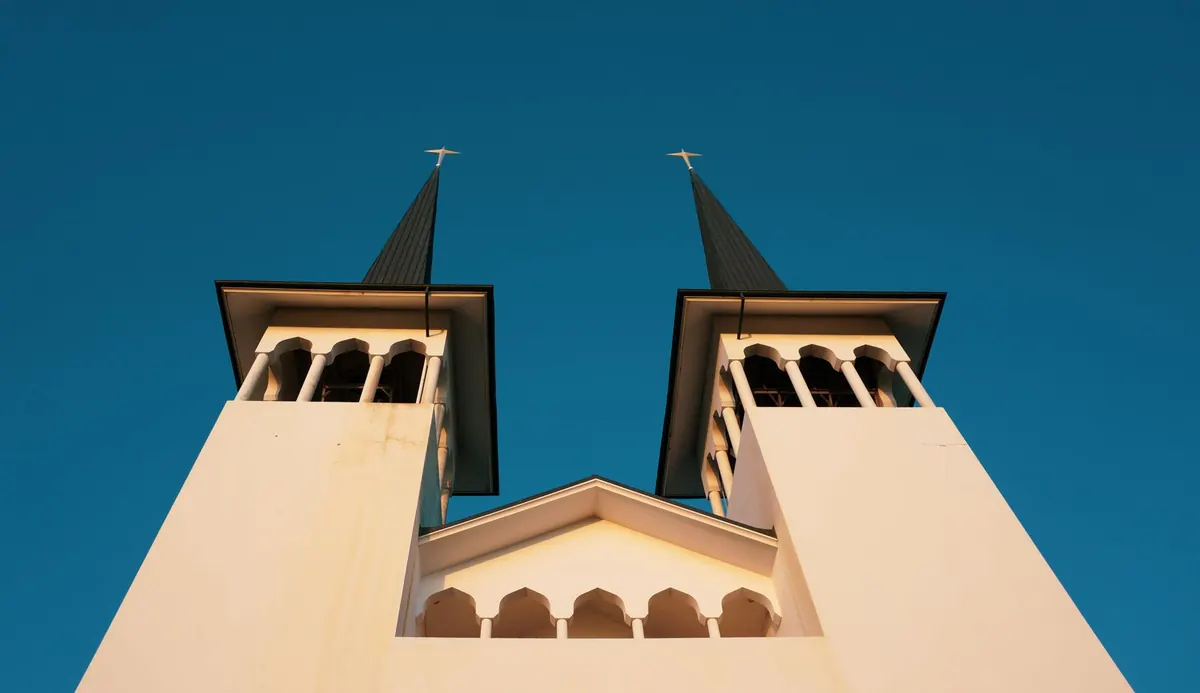
Stand in almost any Italian piazza and look up. A tall, square tower of brick or stone rises beside the church rather than out of it, its upper stage opened with deep arches, the bells visible inside. That is, in most cases, a campanile — and it is not quite the same thing as the parish tower you climbed last summer in England, or the spire you photographed from a train in France. The difference is not a technicality for architectural historians. Once you can read it, a town's bell tower starts telling you who paid for it, when it was built, and what the building was really for.
The word comes from campana, Italian for bell. In Italian, any bell tower is a campanile — including one grafted onto the front of a Baroque church or tucked over the crossing. So if you ask a sacristan about "il campanile" and are pointed at a tower attached to the facade, nobody is being careless with language.
In English, though, the word has drifted into a narrower meaning. Heritage travelers use "campanile" for the Italian tradition: a tall, usually square tower, often standing free of the church, built in brick or stone, with a belfry stage of open arches and a roof that finishes in a pyramid, a cone, a small dome or a flat terrace with a statue. Giotto's marble tower beside Florence Cathedral, the leaning tower at Pisa, the brick giant in St Mark's Square in Venice — these are the reference points.
The single most useful difference is structural. Most church towers elsewhere in Europe are part of the church: they sit at the west end, over the crossing, or against a flank, sharing walls and foundations with the nave. Walk around the building and the tower is a lump in the same mass.
A campanile often stands clear. You can walk a full circle around its base at ground level, usually through a lane, a courtyard or a corner of the piazza. It has its own door, its own staircase, sometimes its own small roof and drainage. In many Italian towns it was financed separately from the church, by a confraternity, a guild, or the commune itself, and it went up on its own schedule — which is why the tower's style and the church's style so often disagree.
A separate tower could be built when money allowed, on its own foundations, without loading the nave. It could also be repaired or rebuilt without closing the church — a real advantage in towns prone to earthquakes. And it carried civic weight. Bells marked the hours, warned of fire and flood, called workers to the fields and announced deaths. A tall tower was a public statement as much as a parish one, which is why so many campanili carry a clock face and a municipal-looking swagger.
Plenty are not. Dense historic centres often had no room to spare, so the tower was built into the church. Look also for the campanile a vela — a "sail" bell gable, a single wall with one or two arched openings holding small bells, standing on the roofline of a modest church. It is one of the most characteristic sights of rural Italy and easy to miss if you are only scanning for tall towers.
Once you leave Italy, the logic changes, and the visual habits change with it.
English parish churches typically present a square tower at the west end, built as one fabric with the nave, often with battlements at the top and buttresses at the corners. The belfry openings are usually fitted with louvres — angled slats that keep rain out while letting sound escape — so you see slatted panels rather than bells. In some regions the tower gives way to a slender spire, which is a roof over the tower rather than a separate structure.
French churches often place the main bell tower over the crossing, or pair towers across the west front, as at Chartres. The flèche is the timber-framed spire that sits above the crossing — a lead-clad needle rather than a masonry tower. A French tower is usually conceived as part of the church's silhouette, not as a neighbour to it.
Spanish cathedrals give you square towers, brick Mudéjar towers in Aragón, and the Giralda in Seville, which began life as a minaret and was converted into a bell tower. German and Austrian churches favour very tall spires, and Baroque churches in Bavaria and Austria often wear onion domes. Russian tradition includes the free-standing zvonnitsa, a bell wall or tower built separately from the church — a reminder that the free-standing idea is not exclusively Italian.
One caution: not every tall medieval tower in Italy is a campanile. Bologna's famous pair, the Asinelli and Garisenda, are family towers from the city's medieval skyline, not church bells. They are worth climbing, but they are a different story.
The belfry stage is where the traditions are easiest to separate at a glance. Italian campanili usually open the top stage with tall, unobstructed arches on all four faces, often with a balustrade or a cornice beneath, so the bells hang visible in the light. English and northern European towers more often close the openings with louvres or shutters.
Then look at the top. Italian towers finish plainly — a low pyramid, a cone, a flat terrace with a statue, occasionally a small dome. Northern towers tend to reach: spires, pinnacles, parapets, weathervanes. Materials are a clue too. Brick dominates the Po valley and the Veneto; stone in the Alps and much of central Italy; marble cladding in Tuscany. A campanile almost always looks built for the town around it rather than imported from a pattern book.
Many campanili open only for limited hours, often through a parish or a local volunteer heritage group, and some are opened for a few weekends a year — ask at the tourist office or the church itself rather than assuming a ticket office exists. Stairs are narrow, steep and usually without a lift, so carry water in summer and skip the climb if you dislike enclosed spaces. Bells are genuinely loud inside a belfry; if ringing is due, wait below, and never pull a rope without permission. Dress as you would for any working church. And when you reach the top, look down at the roof of the church next door: the join, or the gap, will tell you the rest of the story.
Photo: Maryann Kariuki / Pexels
A month-by-month guide to how weather, light and seasonal access shape bell tower visits, with practical...
A practical comparison of campanile climbs by view, access and crowds, with tips on stairs, timing and...
A practical walking route for reading a historic Italian town through its bell towers, from belfry details...